Women's Health & Family Planning
Heavy Periods in Nigeria: A Practical Plan for Tracking, Relief, and When to Get Checked
If your period is soaking pads fast, keeping you up at night, or leaving you weak, this guide helps you track what is happening and know when to get checked.
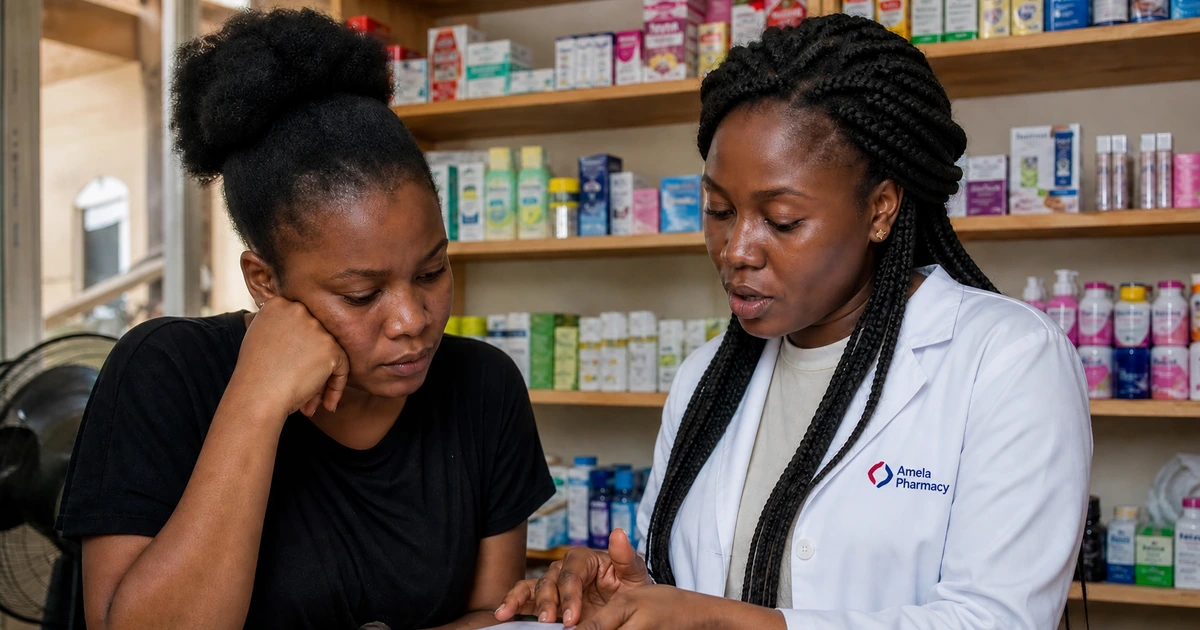
Reviewed by: Amela Pharmacy team, Uyo Last updated: 25 Feb 2026
Some purchases tell the story before a customer says a word: an extra pack of pads, pain tablets, and that tired face after a long day in Uyo traffic.
If your period is so heavy that you plan your market run, keke ride, and even where you will sleep around bathroom access, it is worth paying attention.
You are not being dramatic.
We see this at the counter often. One woman came in after an evening market run, half laughing and half frustrated, because she had already changed pads twice before she got home.
When she mentioned dizziness and clots, the conversation quickly moved from coping tips to getting checked properly.
When a period may be heavier than normal
A heavy period is not only about how much blood you think you are losing. It is also about what the bleeding is doing to your daily life. If it is stopping you from work, school, worship, sleep, or even a simple outing, that counts.
Common signs that a period may be heavy include:
- needing to change a pad very often, such as every 1 to 2 hours on the heaviest days
- soaking through pads or clothing, or needing to wake up at night to change
- needing to use double protection because one product is not enough
- bleeding for more than 7 days
- passing large clots
- feeling unusually tired, weak, short of breath, or light-headed during your period
Some women have always had heavier periods. Others notice a change after pregnancy, as they approach menopause, or because of an underlying condition. A sudden change is a good reason to get checked.
Why it matters beyond the inconvenience
Heavy bleeding can drain your energy, your time, and your confidence. It can also contribute to anaemia, especially if it keeps happening month after month.
WHO notes that anaemia remains a major health problem and affects many menstruating girls and women, including in Africa. Heavy menstrual loss is one reason it can happen.
That means the tiredness, breathlessness on the stairs, headaches, or pounding heartbeat you may be brushing off as stress is worth discussing with a clinician.
Heavy periods can also be linked to conditions like fibroids, hormonal changes, endometriosis, bleeding disorders, or side effects from some medicines. Sometimes the cause is straightforward. Sometimes it needs proper assessment.
A one-cycle checklist you can start this month
Before you see a doctor or nurse, track one full cycle. A simple note on your phone is enough. It makes the appointment more useful and helps you explain what is happening without guessing on the spot.
Use this checklist:
- Write the start and end date of your period.
- Note which days are the heaviest.
- Record how often you are changing pads or other period products on heavy days.
- Note if you are soaking through clothes or bedding, or waking at night to change.
- Write down clotting if you notice it, especially if clots are large or frequent.
- Track pain: where it is, how strong it feels, and whether it stops your normal activities.
- Note symptoms like dizziness, weakness, shortness of breath, palpitations, or fainting.
- List any medicines you took, including pain tablets, aspirin, blood thinners, herbal products, or supplements.
- Note bleeding between periods, after sex, or any chance of pregnancy.
If talking about periods feels awkward, start with numbers, not embarrassment. Date, pad changes, clots, pain, dizziness. That alone gives a clinician a much clearer picture.
If you prefer paper, keep it in your bag. If you prefer your phone, even better, it is usually with you when the details are fresh.
Common medicine mistakes that can make things worse
When bleeding is heavy, it is normal to reach for whatever seems to help. But mixing medicines without checking can create another problem.
A few mistakes we warn people about a lot are:
- taking two anti-inflammatory painkillers together, for example ibuprofen plus diclofenac, because one is not working fast enough
- using aspirin for period pain without checking first, since aspirin can increase bleeding in some people
- taking pain medicines more often than the label says, especially when cramps are severe
- starting iron supplements on your own and then stopping after a few days because of side effects, without asking how to take them properly
- forgetting to mention blood thinners, ulcer history, kidney problems, asthma, or pregnancy when buying pain relief
- using a friend or relative's prescription medicine because it helped them
The safest move is simple: show the pharmacist everything you are taking, including supplements and herbal products, before adding another medicine.
What can help while you arrange a check-up
If your symptoms are not an emergency, there are practical ways to make a difficult period more manageable while you plan a clinic visit.
Try this:
- use a heating pad or warm compress on the lower abdomen for cramps
- stay hydrated, especially if you are bleeding heavily and feeling washed out
- keep a small period kit in your bag for long days: spare pads, underwear, wipes, and a small nylon bag for clean-up
- ask a pharmacist for pain relief that fits your health history and other medicines
- eat regular meals; if bleeding is heavy, include iron-rich foods and foods with vitamin C where possible
- rest when you can, even if it is a short break between errands
This is not about being fragile. It is about reducing stress on your body while you get the right assessment.
And yes, planning a backup pad before a long keke ride is wisdom, not overthinking.
When to seek urgent help
Heavy periods are common, but some symptoms need urgent medical attention.
Seek urgent care if you have any of these:
- bleeding so heavy that you are soaking through a pad every hour for several hours, or the bleeding is suddenly much worse than usual
- fainting, severe dizziness, confusion, severe weakness, chest pain, or trouble breathing
- severe pelvic pain, especially if it is different from your usual cramps
- heavy bleeding and you might be pregnant, or you have a positive pregnancy test
- bleeding after menopause
- heavy bleeding with fever, severe illness, or a bad-smelling discharge
If you feel too weak to move around safely, ask someone to take you in rather than waiting it out at home.
What a clinician may ask, and why that helps
A proper review is not just a quick question about pads. A clinician may ask how long your periods last, how often they come, how the bleeding affects your life, what medicines you use, and whether anyone in your family has bleeding problems.
Depending on your symptoms, they may recommend tests to check for anaemia, pregnancy, thyroid issues, or clotting problems, and they may arrange further examination or imaging. This is part of finding the cause, not just treating the symptom for one month.
If your heavy bleeding has been there since your first few years of menstruation, or you bruise easily or bleed for a long time after cuts, mention that clearly.
You are not wasting anyone's time by bringing this up.
Disclaimer
This article is for general health education and does not replace medical care. If your bleeding is heavy, persistent, worsening, or affecting your daily life, please seek professional care from a qualified clinician.
Sources & further reading
- NHS: Heavy periods
- CDC: About heavy menstrual bleeding
- NICE guideline NG88: Heavy menstrual bleeding
- WHO: Anaemia fact sheet
You deserve a period plan that does not run your whole week.
No comments yet. Login to start a new discussion Start a new discussion