Heart Health & Blood Pressure
Home Blood Pressure Checks: How to Get Accurate Readings in Nigeria
Simple, practical tips to get accurate home blood pressure readings in Nigeria—plus common mistakes, a quick checklist, and red flags to watch for.
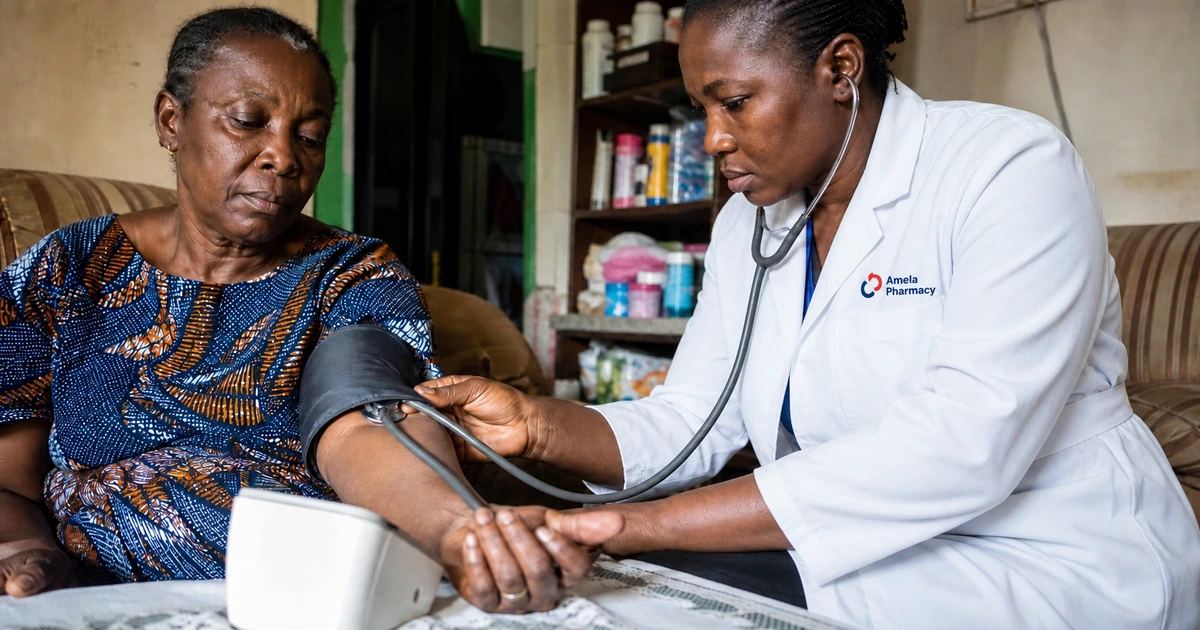
Reviewed by: Amela Pharmacy team, Uyo Last updated: 28 Jan 2026
Checking your blood pressure at home can save you stress and help you catch problems early, but only if the readings are done correctly. At the pharmacy, I often see people panic over one high number taken right after rushing around. A few small fixes can make your readings much more reliable.

Why checking at home helps
High blood pressure usually has no clear symptoms. Home checks help you and your clinician see your real pattern over days, not just one clinic reading. They can also reveal white-coat effect, where readings rise during hospital visits because of anxiety.
Home monitoring is a support tool, not a replacement for clinic care.
The most common accuracy problem: cuff size
Cuff size matters more than most people think. - A cuff that is too small can give falsely high readings. - A cuff that is too large can give falsely low readings.
If the cuff feels painfully tight, it may be too small. Measure the middle of your upper arm and choose a cuff range that matches. When buying a monitor, go for a validated upper-arm device and ask your pharmacist to confirm the cuff fit.
Practical checklist for accurate home BP readings
Use this every time: 1. Avoid caffeine, smoking, and exercise for at least 30 minutes before checking. 2. Empty your bladder first. 3. Sit quietly for 5 minutes before taking a reading. 4. Sit with back supported, feet flat, and legs uncrossed. 5. Place the cuff on bare upper arm, not over clothing. 6. Support your arm at heart level on a table or pillow. 7. Stay quiet and still; no talking or phone scrolling. 8. Take two readings, one minute apart, and record both.
If NEPA takes light and you just climbed stairs or set the generator, rest first before checking.
Common mistakes (and easy fixes)
- Checking immediately after trekking, climbing stairs, or rushing: rest 5 minutes first.
- Using wrist or finger monitors: upper-arm monitors are usually more reliable.
- Taking only one reading: always take two and log both.
- Measuring over sleeves: place cuff directly on skin.
- Changing posture mid-reading: stay still until it finishes.
- Never comparing your device: take it to a pharmacy or clinic occasionally for a sanity check.
How often should you check?
A practical starting routine many clinicians use: - Check twice daily (morning and evening). - Take two readings each time, one minute apart. - Continue for 4 to 7 days. - Ignore Day 1 readings, then average the rest.
Once readings are stable, your clinician may advise checking less often.
What the numbers mean
Blood pressure has two values: - Systolic (top): pressure when the heart pumps. - Diastolic (bottom): pressure when the heart relaxes.
General adult ranges often used: - Below 120/80 mmHg: Normal - 120 to 129 and below 80: Elevated - 130 to 139 or 80 to 89: Stage 1 high blood pressure - 140 or higher, or 90 or higher: Stage 2 high blood pressure
Targets can differ based on age, pregnancy status, kidney disease, diabetes, and other health conditions, so always interpret trends with a clinician.
Keep a simple BP log
Write down: - Date and time - Reading 1 - Reading 2 - Notes (for example: poor sleep, missed dose, headache, night shift)
A clear log helps your clinician make safer treatment decisions.
When to Seek Help
Seek urgent care if: - Your reading is 180/120 mmHg or higher. Wait 5 minutes, recheck, and if it remains high with symptoms, get emergency help immediately. - You have chest pain, shortness of breath, severe headache, confusion, weakness on one side, trouble speaking, fainting, or sudden vision changes.
Do not wait at home for severe symptoms to pass.
Quick pharmacy FAQs
My BP is higher in hospital than at home. Does that mean I am fine?
Not always. Anxiety can raise clinic readings, but your home pattern still matters. Share your log for proper interpretation.
Can I stop my BP medicine now that my readings look normal?
No. Normal readings often mean treatment is working. Do not stop or adjust medicines without medical guidance.
Can I use either arm?
Yes, but after comparing both arms early on, use the arm with the higher reading consistently.
Short disclaimer
This article is for general health education and does not replace medical care. For personal advice, diagnosis, or treatment decisions, please speak with a qualified healthcare professional promptly.
Need help? Chat with us on WhatsApp or contact us.

No comments yet. Login to start a new discussion Start a new discussion