Senior Health & Caregiving
Preventing Falls at Home in Nigeria: A Room-by-Room Plan for Older Adults
One quick slip can change family life overnight. Use this room-by-room guide to reduce fall risk for older adults at home in Nigeria.
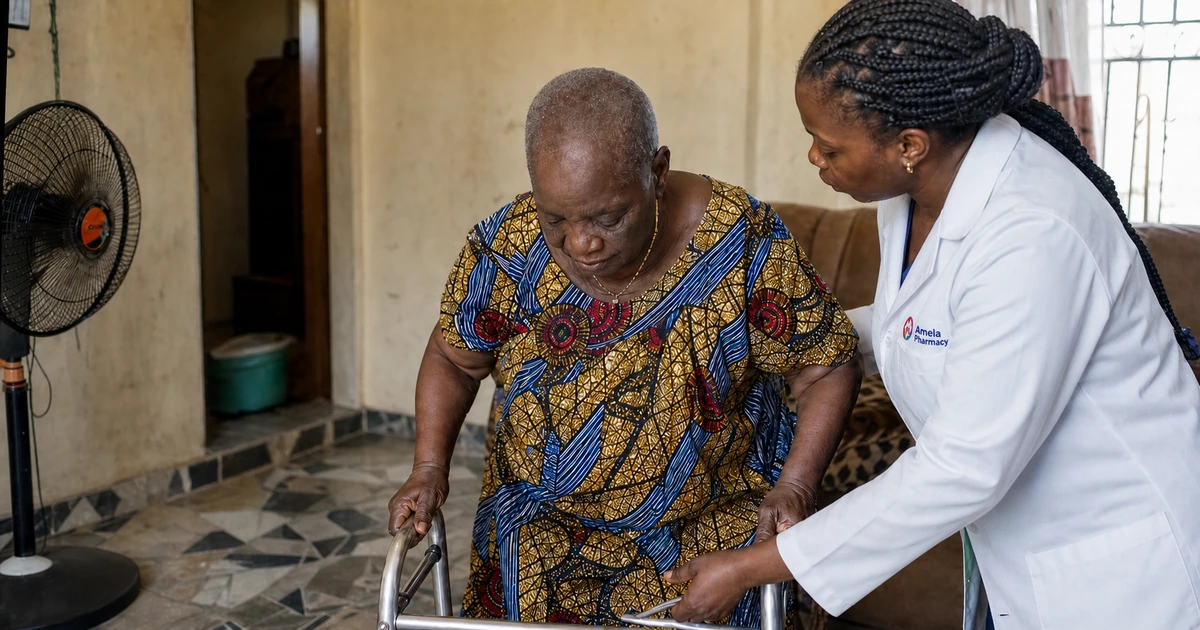
Reviewed by: Amela Pharmacy team, Uyo Last updated: 18 Feb 2026
That small shout from the corridor usually comes with two seconds of silence, then everybody starts running.
Many families in Uyo know this moment. Someone stands up too quickly, their slipper catches the edge of a rug, and the day changes shape. One fall can mean pain, fear of walking, and weeks of disrupted routines for the whole house.
At the pharmacy counter last week, a son came in after a market run with his mum. She had not broken a bone, thankfully, but she stopped moving around the house because she was scared of falling again. Their question was simple: what can we fix at home today so this does not happen twice?
If that sounds familiar, this guide is for you.
Why falls happen quietly at home
Falls in older adults are rarely caused by one thing. It is usually a mix: weaker leg strength, poor lighting, medicine side effects, slippery bathroom floors, rushing to answer a call, and shoes that look soft but grip like soap.
Home is where people should feel safest, but home is also where habits are automatic. You stop noticing the bucket near the bathroom door, the charger wire across the passage, or that one step near the kitchen that is always dim when NEPA takes light.
The good news is that most risk factors are practical and fixable. Not expensive. Not dramatic. Small changes done consistently.
A practical room-by-room safety checklist
Do this sweep with your parent or older relative present, not in their absence. When people help design the plan, they are more likely to use it.
Entrance and passage: clear shoes, bags, and water containers from walkways. Secure loose mats with non-slip backing or remove them. Make sure night movement from bedroom to toilet has clear lighting, including rechargeable lamps for power cuts.
Living room: keep remote controls, phones, and regular items within easy reach so nobody climbs unstable stools. Arrange furniture with wide walking space. Tape or reroute extension cables that cross walking paths.
Bedroom: set bed height so feet touch the floor firmly before standing. Keep a stable chair or bedside surface for support when changing clothes. Place slippers with good grip right by the bed, not across the room.
Bathroom and toilet: install non-slip mats inside and outside the bathing area. Add grab rails if possible. Keep soap and buckets positioned to avoid twisting and bending on wet floors. Dry the floor quickly after bathing.
Kitchen: move frequently used items to waist level to reduce overhead reaching. Clean spills immediately, especially cooking oil. Keep a sturdy step stool with hand support if reaching is necessary; avoid plastic chairs.
Outdoor steps and compound: improve lighting at doorways and steps. Repair cracked tiles and uneven concrete. During rainy season, scrub algae-prone areas and use textured footwear before stepping out.
Low-cost changes still count. A brighter rechargeable lamp, one properly fixed non-slip mat, and moving daily-use items to easy reach can reduce risk more than many families expect.
Take photos of risky spots and review them after one week. Families often notice new hazards after this first sweep.
A 10-minute night-time safety test
Do one realistic safety test after sunset. Walk the normal route from bed to toilet and back using the same lamp or torch your parent uses at night. Check where shadows hide floor edges, where wires cross the path, and where door thresholds catch slippers.
Then simulate a brief power outage. If visibility drops too much, add backup lighting immediately. Night toilet trips are one of the highest-risk moments for falls, so keep the route clear and keep phone, torch, and safe footwear within arm reach before sleep.
Daily habits that reduce fall risk
A safer house helps, but the body still needs support. Balance and strength are like savings: small deposits every day.
Move daily: short walks, sit-to-stand practice from a firm chair, and gentle balance exercises can build confidence. For many older adults, 10 to 15 minutes done consistently works better than long sessions done once in a while.
Stand up slowly: dizziness after standing can trigger falls. Ask your parent to pause at bedside for a few seconds before taking the first step.
Hydrate and eat regularly: skipping meals or drinking too little can cause weakness and lightheadedness. In hot weather, this matters even more.
Check vision and hearing: poor vision or hearing changes balance and depth judgment. Encourage routine checks and proper use of prescribed glasses or hearing support.
Choose footwear with grip: soft, loose slippers may feel comfortable but increase slip risk. Look for closed-back or secure-fitting options with non-slip soles.
Fear of falling can make people move less, and moving less can make falls more likely. That cycle is common, and it can be broken gently with routine and encouragement.
The medicine review many families skip
This part is important and often overlooked. Some medicines, especially when combined, can increase dizziness, sleepiness, confusion, or sudden drops in blood pressure.
Do a full medicine review with your pharmacist or doctor, including:
- prescription medicines
- over-the-counter products
- herbal mixtures
- sleep products
- pain relievers
Bring everything in one bag, including supplements and products used only occasionally. A medicine taken only at night can still affect balance during early morning toilet trips.
Watch for warning patterns after starting a new medicine or changing dose: unusual drowsiness, wobbliness, near-falls, or confusion. Report these quickly. Do not stop long-term medicines abruptly unless your clinician advises it.
Health checks families can schedule this month
Home fixes are essential, but hidden medical issues also raise fall risk. Ask your clinician about postural blood pressure checks, anemia symptoms, blood sugar swings, foot pain or numbness, and current eye status.
Untreated cataract, neuropathy, knee pain, or poorly controlled blood pressure can quietly change walking pattern and stability. If you notice slower walking speed, repeated stumbles, or sudden fear of movement, request a mobility assessment and physiotherapy guidance early. Early review after a near-fall is easier than recovery after a major injury.
If a fall happens: what to do in the first minutes
Panic helps nobody. A clear plan helps everybody.
Pause and assess: ask if the person can speak clearly and where pain is worst. Do not rush to lift them immediately.
Check for major injury signs: severe hip pain, head impact, bleeding, obvious limb deformity, or inability to move normally.
Keep them warm and calm: use a wrapper, towel, or blanket while arranging help. Reassure them and keep other people from crowding.
Help up only if safe: if there is no major pain or suspected serious injury, support them to roll to their side, move to hands and knees, and use stable furniture to rise slowly. If unsure, wait for professional help.
Document and follow up: note time, location, possible trigger, and medicines taken that day. This helps your pharmacist or doctor identify preventable causes.
Please avoid pulling someone up by the arms in a hurry. It can worsen hidden injuries.
Red flags: seek urgent help now
After any fall, seek urgent care immediately if you notice any of these:
- head injury, confusion, repeated vomiting, fainting, or unusual sleepiness
- severe headache or neck/back pain
- hip pain, inability to stand, or leg that looks shortened or turned outward
- chest pain, breathlessness, or one-sided weakness
- bleeding that does not stop
- person is on blood thinners and hit their head, even if they seem okay at first
When in doubt, treat it as urgent and get professional assessment quickly.
A simple weekly caregiver plan
You do not need a complicated spreadsheet. Keep it simple and repeatable.
- Monday: quick home hazard walk-through (5 to 10 minutes).
- Tuesday: medicine check-in, especially for new drugs or dose changes.
- Wednesday: balance and strength day, done safely with supervision.
- Thursday: hydration and meal rhythm check, especially in hot weather.
- Friday: footwear and lighting check for weekend movement.
- Saturday: short family review of any near-slip incidents.
- Sunday: reset home layout and prepare for the week.
Keep a small notebook or phone note for near-falls. One line per event is enough: where it happened, what the person was doing, footwear used, and time of day. Patterns appear quickly.
One near-fall is useful information. It is not a failure. It is an early warning you can act on.
When your parent says I am not that old
This conversation is common and delicate. Most older adults are protecting dignity, not rejecting help.
Start with teamwork language: we are making the house easier for everyone, not only for you. Offer choices instead of orders. Ask which one change they want first: bathroom mat, brighter light, or better slippers.
Keep the tone practical and respectful. A good line is, we all trip sometimes, let us remove stress from the house before stress removes our peace.
If possible, involve one trusted person they listen to, such as a sibling, pastor, neighbour, or long-time friend. People accept safety changes faster when they feel heard.
Quick questions families ask at the counter
Is a walking stick a sign of weakness?
Not at all. A correctly sized walking aid can improve confidence, reduce strain, and prevent injury. The key is proper fitting and learning how to use it safely.
Should older adults avoid movement after a fall?
Total rest for long periods often makes balance and muscle strength worse. After medical review, guided movement is usually part of recovery.
Can sleep medicines increase fall risk?
Some can, especially when combined with other sedating medicines. Never adjust doses on your own. Ask for a medication review.
My parent says I am fine, I just slipped. Should we still check?
Yes. Many families miss warning patterns until the second or third fall. A quick review of home hazards, medicines, and balance is worth it.
Disclaimer
This article is for general health education and does not replace personal medical advice, diagnosis, or treatment. If symptoms are severe, sudden, or worrying, seek urgent professional care immediately.
Sources & further reading
- WHO: Falls
- CDC: About Older Adult Fall Prevention
- CDC STEADI: Older Adult Fall Prevention
- NHS: Falls
Small home changes today can protect independence for years.

No comments yet. Login to start a new discussion Start a new discussion