Pregnancy & Newborn Care
Mosquito Repellent During Pregnancy: What's Safe and What to Skip
Pregnancy is not the time to endure mosquito bites in silence. Here's how to choose a repellent, use nets well, and know when fever needs fast attention.
Reviewed by: Amela Pharmacy team, Uyo Last updated: 31 Mar 2026
When mosquito season really starts, pregnancy can make every bite feel extra annoying. The itching is one thing, but the bigger issue is this: pregnancy is not the time to leave mosquito protection to chance.
We hear this question often at the counter. Someone comes in after a bad night, points at a repellent cream, then asks quietly if it is too strong for pregnancy. Maybe NEPA took light, the windows stayed open, and sleep turned into hours of buzzing, slapping, and scratching.
The reassuring answer is yes: you do not have to suffer through bites to protect your baby. You just need the right type of repellent, proper use, and a few simple habits that make a real difference.
Why mosquito bites matter more in pregnancy
Mosquito bites are not only a comfort issue. In malaria-prone areas, pregnancy raises the stakes. Malaria in pregnancy can lead to anaemia, illness, low birth weight, and preterm delivery. That is why prevention matters before anyone even develops fever.
That is also why saying, 'I do not like chemicals, I will just endure it,' is not a wise plan. Enduring bites is not automatically the safer option. Good prevention is part of good pregnancy care, especially when evenings are damp and you are sitting outside for air after a long day.
So, what kind of repellent is usually considered safe?
Start with the label. Look for a properly labelled insect repellent with a recognised active ingredient such as DEET, picaridin, or IR3535. These are common actives in products made to prevent mosquito bites, and public health guidance generally supports using registered repellents in pregnancy when they are used as directed.
That last part matters.
Repellent is not a product to freestyle with. More is not better. Mixing two products is not smarter. And turning a skin product into something you rub all over clothes is not extra protection.
A simple rule helps: if it is meant for skin, use it on exposed skin only. If it is meant for clothing or nets, keep it off your skin.
A quick pharmacy checklist before you buy
If you are standing in front of the shelf and not sure what to pick, use this checklist:
- Check that the product is an insect repellent, not just a perfumed body cream making mosquito claims.
- Look for a clear active ingredient and clear directions for use.
- Choose a sealed product with readable instructions, not something poured into an unlabelled bottle.
- If you have very sensitive skin, ask which option is least likely to irritate and do a small patch test if appropriate.
- If you are already using medicated creams for eczema, rash, or pregnancy-related itching, ask where the repellent should fit into that routine.
You do not need the most expensive product. You need one you can recognise, apply properly, and tolerate well enough to keep using.
How to use it without turning it into a hassle
Most repellent mistakes happen after purchase, not at the shelf.
Apply it to exposed skin only. Think arms, legs, ankles, and anywhere else mosquitoes can easily reach. Do not apply it under clothing. Do not rub it into broken skin, rashes, or areas you have just shaved raw. If you are using a spray, spray into your hands first for the face, then dab carefully and avoid the eyes and mouth.
If you also use sunscreen during the day, sunscreen goes first and repellent goes second.
When you come back indoors for the night, wash the treated skin off when practical. Then reapply the next time you need it, based on the instructions on the pack. If a repellent lasts four hours, it will not somehow cover you till morning just because you are tired.
One more thing: if the smell makes you queasy, that is real. Pregnancy noses can be dramatic. Pick a formulation you can actually live with. A product you will use properly is better than a perfect one you abandon after one evening.
What to skip or double-check
This is where plenty of people miss it.
- Do not use permethrin directly on your skin. Products with permethrin are for clothing, gear, or treated nets, not for rubbing on your arms.
- Do not assume anything called natural is automatically safer or more effective.
- Do not use a repellent with no clear label, no instructions, or no identifiable manufacturer.
- Do not layer two different repellents because the first one feels too light.
- Do not spray your face directly.
- Do not take leftover antimalarial tablets just because you have been bitten a lot.
That last point is important. Mosquito bites do not mean malaria, and pregnancy is not the time to guess with leftover tablets. Prevention and treatment are not the same thing.
Nets still do a lot of the hard work
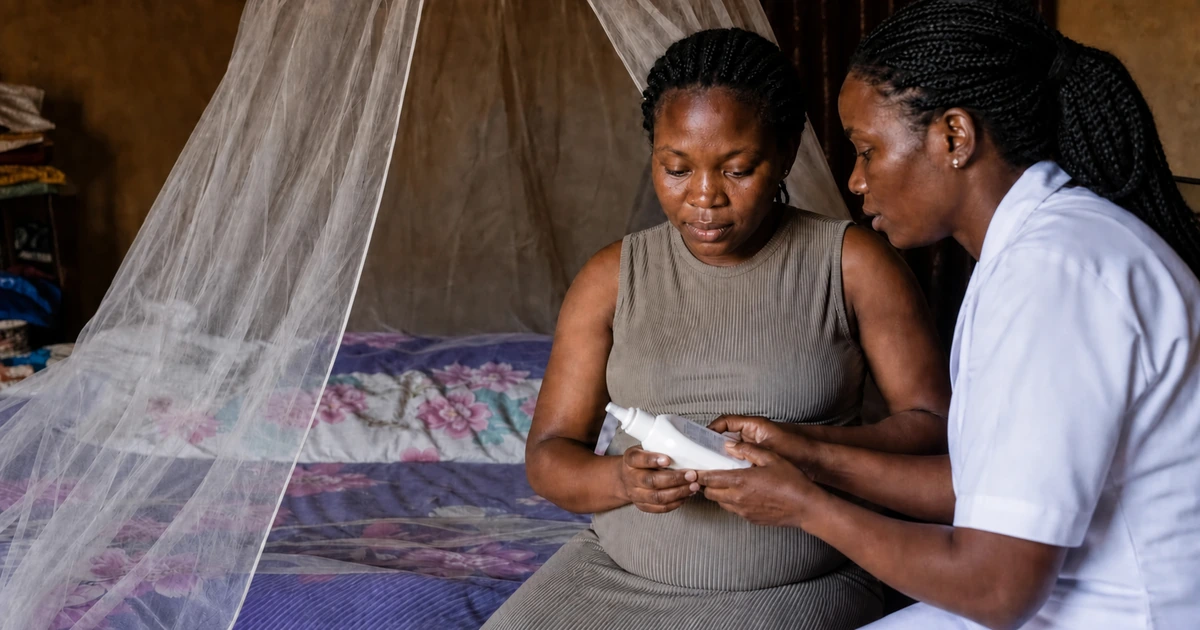
A good repellent helps. A properly used bed net does even more, because it covers the hours when mosquitoes are most likely to win the argument.
If you sleep under a long-lasting insecticide-treated net, make sure it is still doing its job:
- Hang it early, not when you are already half asleep and irritated.
- Tuck the edges well so there are no easy entry points.
- Check for tears or loose corners.
- Keep the sleeping area as cool as you can so you are not tempted to push the net aside at 2 a.m.
- If you have a power cut and the fan stops, resist the urge to sleep uncovered.
We see this often on humid nights: someone starts the evening under the net, gets hot around midnight, pushes it aside for fresh air, and wakes up with fresh bites. Comfort matters, but protection has to survive the middle of the night, not just bedtime.
If you are pregnant, keep the routine simple and boring. Net. Repellent if needed. Screened windows where possible. Less standing water around the house. Repeat.
Small habits that lower bites without stress
You do not need to turn it into a military operation. A few practical habits are enough.
- Empty or cover containers that hold water around the house.
- Wear loose long sleeves or trousers in the evening if mosquitoes are active.
- Use screens or close doors early if your room tends to fill with insects after sunset.
- Be extra careful during outdoor evening chats, compound sitting, or a late market return when ankles and arms are exposed.
- Keep baby cots, sleeping mats, and bedrooms set up before bedtime instead of fixing everything when you are already tired.
These small habits matter because prevention usually breaks down in ordinary moments, not dramatic ones.
Do not forget the antenatal side of malaria prevention
Skin repellent is not the whole story. In pregnancy, malaria prevention also belongs inside routine antenatal care. Keep your clinic visits. Ask what malaria prevention steps are due at your stage of pregnancy. Do not skip antenatal appointments and assume a cream or spray can carry the full load.
This matters even more in a first pregnancy, when malaria risk can be higher. If you already have anaemia, have been unwell recently, or you are dealing with repeated mosquito exposure where you live, bring it up early instead of waiting for fever to force the conversation.
If fever shows up, move quickly and get checked
This is the part many families get wrong. A pregnant woman feels hot, weak, shivery, or headachy, and somebody quickly brings out old malaria tablets from a drawer. That is risky.
Not every fever is malaria. Not every malaria case should be treated by guesswork. And pregnancy is not the time for borrowed medicines.
If you develop fever, chills, unusual weakness, vomiting, headache, or a flu-like illness after heavy mosquito exposure, get prompt medical assessment and testing. No need to panic, but do not delay.
Early testing matters because malaria can worsen quickly, and delaying care can be hard on both mother and baby. It also helps you avoid taking the wrong medicine for the wrong illness.
When to seek urgent help
Please get urgent medical care if you are pregnant and any of these happen:
- fever with chills, marked weakness, or repeated vomiting
- fainting, confusion, difficulty breathing, or severe drowsiness
- you cannot keep fluids down and start passing very little urine
- severe abdominal pain, strong contractions, or vaginal bleeding
- reduced baby movement later in pregnancy
- a severe reaction after a repellent or bite, such as facial swelling, wheezing, or widespread rash
If you are unsure whether it is urgent, lean toward getting checked. Pregnancy is not a good time to run long home experiments.
The short version for busy evenings
If you want the practical summary, here it is:
- Use a properly labelled insect repellent with a recognised active ingredient and follow the pack instructions.
- Apply it to exposed skin, not under clothes and not on broken skin.
- If you use sunscreen, sunscreen first, repellent second.
- Use treated nets properly and keep them tucked.
- Do not put permethrin products on skin.
- Do not self-treat suspected malaria in pregnancy with random leftover tablets.
- Fever in pregnancy needs prompt assessment, not guessing.
That is the version to remember on nights when the rain starts, the air feels heavy, and the mosquitoes sound unusually bold.
A quick safety note
This guide is for general health education. It does not replace antenatal care or personal medical advice. If you are pregnant and unsure what is safe with your skin condition, medicines, trimester, or symptoms, seek professional care promptly.
Sources & further reading
- WHO: Malaria
- WHO: Insecticide-treated nets to reduce the risk of malaria in pregnant women
- CDC: Preventing mosquito bites
- NHS: Malaria
A calmer night starts with prevention you can actually keep up with.

No comments yet. Login to start a new discussion Start a new discussion