Medication Safety & Pharmacy Tips
Menofix Capsule: what to know before you buy or use it
Menofix Capsule is sold as a menopause support supplement, but the online product details only tell part of the story. Before you buy it, it helps to separate the visible pack claims from the checks t

Reviewed by Ime Last updated: 2026-04-21
This article is general information only and does not replace advice from your pharmacist or clinician. Always follow the directions on the pack you have bought.
Menofix Capsule is sold as a menopause support supplement, but the online product details only tell part of the story. Before you buy it, it helps to separate the visible pack claims from the checks that matter for safety.
What Menofix Capsule appears to be
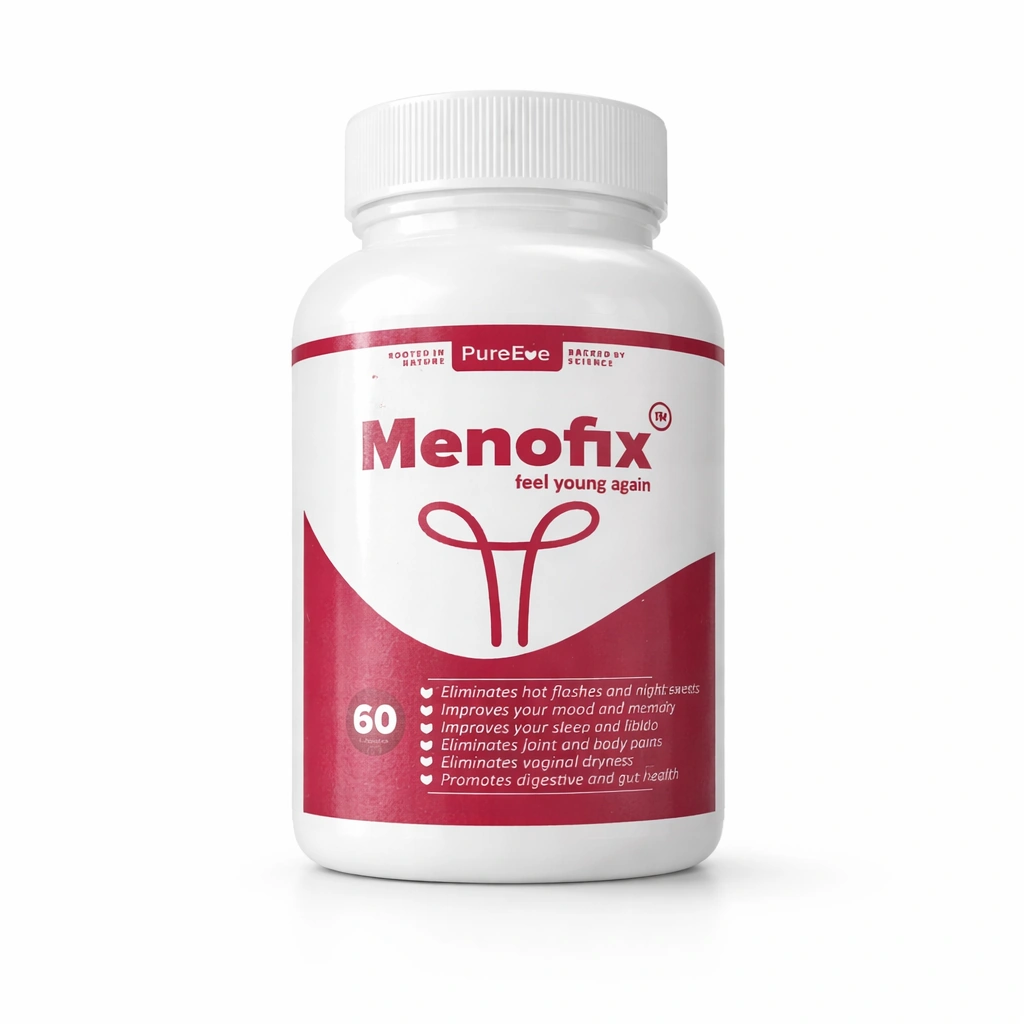
Menofix Capsule is sold as a menopause support supplement in a 60-capsule pack. The live Amela Pharmacy listing describes it as a hormone-free, vegetarian-friendly product for use during and after menopause.
That is a useful starting point, but it is not enough to treat it like a medicine with fully visible online details. In the materials reviewed, the full ingredient panel, exact daily directions, storage advice, expiry date and NAFDAC number were not clearly available online. So the sensible approach is to read the physical pack properly before you start it.
It also helps to keep the category in mind. Menofix is presented online as a supplement, not as a prescribed menopause treatment and not as a product with fully displayed medicine-style instructions on the retail page. That matters because readers should expect to verify the bottle or leaflet themselves rather than assume the online listing gives every detail needed for a safe purchase.
What the bottle claims, and how to read that calmly
The front label mentions support around hot flushes or night sweats, mood and memory, sleep and libido, joint and body pains, vaginal dryness, and digestive or gut health. The online listing also mentions vitamin B6, vitamin D and other nutrients.
Read those points as product claims, not as a promise that one bottle will sort every menopause symptom. Menopause can affect people very differently, and some symptoms can overlap with other health issues. A supplement may be one part of self-care, but it should not replace proper review if symptoms are strong, unusual or dragging on.
WHO and NHS guidance are useful here because they show how broad menopause symptoms can be. Hot flushes, sleep problems, mood changes, reduced sex drive, vaginal dryness, joint pains and brain fog can all happen, but not every symptom is automatically explained by menopause and not every symptom should be self-managed in the same way. That is why calm, label-first buying advice is more helpful than making Menofix sound like an all-in-one answer.
What to check on the pack before you pay
The quickest way to avoid a bad purchase is to use the bottle or leaflet, not just the front label, as your final check. The ingredient list tells you what is actually inside. The directions tell you how the maker expects it to be used. The expiry date, batch details and storage advice help you judge whether the product has been handled and labelled properly.
The NAFDAC registration number also matters because label guidance for supplements expects key pack information to be available on the product itself. If you cannot clearly find the core details you would normally want to confirm before taking a supplement, treat that as a reason to pause rather than a reason to guess.
This is also the point to check that the seal is intact, the 60-capsule count matches what you are paying for, and the pack you receive is the exact product you meant to buy. If anything on the bottle is missing, unclear or different from what you expected, ask the pharmacist before paying or before starting the capsules.
Who should ask a pharmacist before starting it
This step matters more than many people think. Menopause supplements and herbal products are not checked in the same way as standard prescription medicines, and "natural" does not always mean low-risk.
Speak to a pharmacist before starting Menofix if you already use regular medicines, take another supplement, use any menopause treatment, or have a long-term condition under treatment. Also ask if you are not sure your symptoms are menopause-related in the first place. The key point is simple: do not combine products blindly and do not guess the dose from a comment online.
A pharmacist can also help with practical questions that the online listing does not answer clearly, such as where the exact directions appear on the pack, whether there are warning statements you should pay attention to, and whether the product makes sense alongside the medicines or supplements you already take. That is often the safest next step when you are interested in Menofix but the labelling information online feels incomplete.
When a clinician review matters more than self-selection
Any bleeding after menopause needs medical assessment, even if it happens once or looks like light spotting. That is not something to file under "menopause symptoms" and manage on your own.
Book a clinician review as well if your symptoms are severe, worsening, affecting sleep or day-to-day life, or you feel the picture does not quite fit menopause. Menofix may be something to ask about, but it is not a substitute for a proper menopause review when red flags or heavier symptoms are on the table.
The same applies if symptoms have changed quickly, if you are unsure whether menopause is really the cause, or if the main issue is something that could point to another condition rather than a straightforward menopausal symptom pattern. In that situation, the safest choice is assessment first and supplement decisions second.
Quick checks before you buy Menofix
- Confirm the exact ingredient list and the daily directions on the bottle or leaflet.
- Check the expiry date, batch number, storage advice and NAFDAC registration number.
- Make sure the seal is intact and the pack says what you expect, including the capsule count.
- Tell the pharmacist about any regular medicines, menopause treatment or other supplements you already use.
- If you have had bleeding after menopause or your symptoms are quite heavy, arrange a clinician review instead of relying on self-selection.
Sources & further reading
- Amela Pharmacy Menofix product page
- Menofix front-of-pack image
- WHO menopause fact sheet
- NHS menopause symptoms
- NHS herbal remedies and complementary medicines for menopause symptoms
- NHS post-menopausal bleeding
- NAFDAC label guidance for herbal medicines and dietary supplements
- NAFDAC Dietary Supplement Regulations 2025

I want to know if me no fix can be taken for numbness of leg
Good day, pls I need the original menofix supplement capsules, how can I get it, I live in Porhourt
Good day,I want to know if menofix capsule can be taking for arthritis?