Diabetes & Weight Management
Home Blood Sugar Checks in Nigeria: A Daily Routine That Works
Blood sugar checks should guide you, not scare you. Here is a practical daily routine for Nigerians with diabetes, plus common mistakes and urgent warning signs.
Reviewed by: Amela Pharmacy team, Uyo
Last updated: 12 Feb 2026
Your meter should guide you, not scare you.
If you have ever checked your blood sugar after a long day and the number made your heart race, you are not alone. As a pharmacist in Uyo, I hear this often. One reading can feel like a final verdict, but it is not. Blood sugar moves with meal timing, stress, sleep, activity, hydration, and medicine timing.
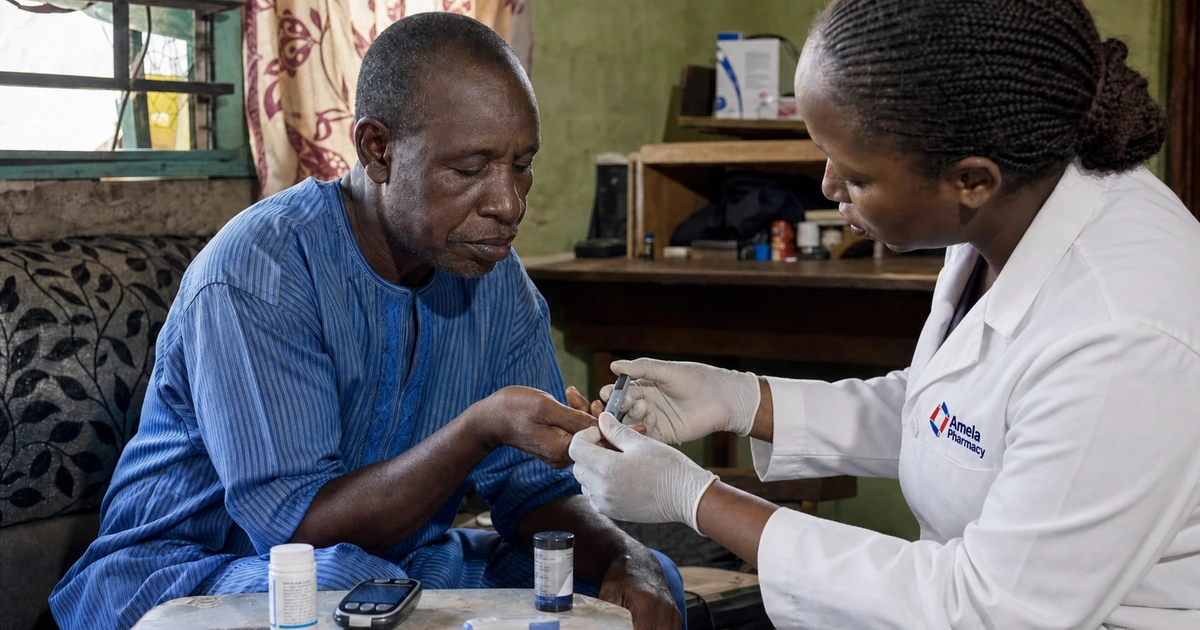
A customer came in worried after a market run and a keke ride because his reading looked very high. He had tested right after handling fruit. We asked him to wash and dry his hands, rest for a few minutes, and test again. The second number was lower and much more believable.
That is the goal of home checks: fewer scary surprises, better daily decisions, and steadier control over time.
Why home checks matter
Home monitoring helps you see patterns, not random numbers. With a simple routine, you can track what happens before breakfast, after meals, on stressful days, and after poor sleep.
A good home-check habit helps you:
- Catch low sugar early.
- Notice repeated highs before they become emergencies.
- Understand how food, movement, and medicine timing affect readings.
- Bring useful records to clinic visits so treatment changes are based on facts.
A meter is one part of diabetes care, not the whole plan. Keep up with clinic reviews, HbA1c checks, and routine eye, kidney, and foot care.
A daily routine that works in real life
The best routine is the one you can keep on busy days.
For many adults with type 2 diabetes, this starter plan is practical:
- Check fasting sugar when you wake up, before food or sweet drinks.
- Check before one main meal each day.
- Check two hours after that same meal.
- Check at bedtime a few times each week.
- Write down anything unusual, like missed meals, illness, poor sleep, stress, or extra activity.
Try this for 1 to 2 weeks, then review your pattern with your doctor, diabetes nurse, or pharmacist. If you use insulin, are pregnant, are newly diagnosed, or often have lows, you may need a more frequent personal plan.
A helpful trick: tie tests to events instead of exact clock time. Before breakfast is easier to remember than an exact minute.
Finger-stick checklist before each test
Most inaccurate readings come from technique problems. Use this quick checklist before every test:
- Confirm your meter and strips are the correct matching brand and model.
- Check strip expiry date.
- Wash hands with soap and water, then dry fully.
- Do not test with wet, oily, or sugary fingers.
- Use the side of the fingertip.
- Avoid squeezing too hard to force blood out.
- Record the reading with context: fasting, before meal, after meal, symptoms, activity.
- Dispose of lancets safely and never share lancing devices.
Storage matters in Nigeria's weather. Heat and humidity can quietly damage strips. Keep strip bottles tightly closed in a cool, dry place. Avoid leaving supplies near windows, inside hot cars, or close to generator heat during long power outages.
A simple 7-day log you can copy
If your readings feel confusing, use a plain notebook for one week.
For each check, write:
- Date and time.
- Blood sugar reading.
- Relation to food: fasting, before meal, or two hours after meal.
- Medicines taken and timing.
- Short note on anything unusual, such as illness, stress, late dinner, or poor sleep.
After 7 days, circle repeated patterns. Maybe fasting numbers are often high. Maybe post-dinner values climb when dinner is late and heavy. These patterns are what your care team can use.
Reading your numbers without panic
Single readings can mislead. Trends across several days are more useful.
Typical targets for many non-pregnant adults are:
- Before meals: 80 to 130 mg/dL (about 4.4 to 7.2 mmol/L).
- One to two hours after meals: below 180 mg/dL (below 10.0 mmol/L).
These are common targets, not personal prescriptions. Your own targets may differ by age, treatment, and medical history, so follow your clinician's range first.
When reviewing your log, ask:
- Are fasting readings repeatedly above target?
- Do certain meals trigger bigger spikes?
- Are lows showing up after delayed meals or extra activity?
- Are unusual readings linked to stress, infection, or poor sleep?
This approach keeps you focused on action, not blame.
Common mistakes we see often
Even careful people make these errors when life gets busy:
- Testing immediately after handling food without washing hands.
- Using expired strips.
- Leaving strip containers open in humid air.
- Ignoring meter error messages.
- Skipping notes, then forgetting the context of readings.
- Changing medicine doses on your own after one bad result.
If results look strange for 2 to 3 days, review test technique first before assuming treatment has failed.
If sugar goes low
For many adults, below 70 mg/dL (3.9 mmol/L) is low and needs quick action.
Use this rescue plan:
- Take about 15 g of fast sugar, such as glucose tablets, regular soft drink, or fruit juice.
- Wait 15 minutes.
- Recheck your sugar.
- If still low, repeat.
- Once better, take a snack or meal with longer-acting carbohydrate and some protein.
If someone is confused, very drowsy, having a seizure, or unconscious, do not give food or drink by mouth. Seek urgent medical help immediately.
When to seek urgent help
Go to urgent care or emergency services if you have diabetes and any of these occur:
- Repeated low readings that do not improve after treatment.
- Severe low-sugar symptoms such as confusion, fainting, or seizure.
- Very high readings with vomiting, tummy pain, deep or fast breathing, fruity breath, or unusual sleepiness.
- You cannot keep fluids down and feel dehydrated.
- You feel seriously unwell and symptoms are worsening.
Waiting too long can turn a fixable issue into a dangerous one.
Quick disclaimer
This article is general health education and does not replace personal medical advice. Diabetes care should be individualised by your doctor or diabetes team. If symptoms are severe or suddenly worse, seek professional care immediately.
Small daily consistency beats occasional perfect days.
Need help? Chat with us on WhatsApp or contact us.

No comments yet. Login to start a new discussion Start a new discussion