Community Health (Akwa Ibom)
How to Keep Stored Water Safer When the Rains Start
When the first heavy rains arrive, tiny shortcuts with drums, buckets, and scoops can upset a whole household. A safer water routine is simpler than it sounds.
Reviewed by: Amela Pharmacy team, Uyo Last updated: 27 Mar 2026
The first hard rain of the season can scatter house routine quickly. NEPA takes light, the pump stops, somebody fills two extra buckets, and the water kept for backup suddenly becomes the main plan.
We hear versions of this at the counter more often than many people realise. Someone comes in after market asking for something for running stomach. After a few questions, the story usually includes a drum that was not properly covered, one cup everybody kept dipping in all day, and water that looked clear enough to trust. Clear water can still bring trouble.
Once the rains start, the risk is not only the source. It is the full journey of the water: where it came from, whether it was treated, the container it stayed in, and how people served it. If that whole chain stays clean, you can prevent plenty avoidable stomach wahala.
Why rainy weeks change the game
Rainy weeks bring many small problems at the same time. Water supply may be less steady. Families store more water because the pump may not work when they need it. Wells and other sources can be affected by runoff. Containers stay damp. Children touch everything. Visitors come in. One scoop can enter the same drum again and again before night.
That does not mean every rainy week must end with stomach bugs in the house. It simply means the water routine needs more care than just covering it somehow and hoping for the best.
The helpful fixes are not fancy. Most of them are ordinary habits, but they are the habits that actually work.
A practical checklist before stomach trouble starts
Use this as a rainy-season reset at home:
Wash storage containers with soap and safe water before refilling them. A quick rinse is not enough if there is slime, dust, or old residue inside.
If you are not sure the water source is safe, treat the water before drinking it. Boiling can help. Chlorine products or purification tablets can also help, but follow the product instructions exactly.
Keep drinking-water containers tightly covered. A lid that is always pushed aside is not doing much.
Pour water out when you can instead of dipping cups into the container. If you must use a scoop, keep one clean utensil for that purpose only.
Do not top up fresh water into a container that still has old water at the bottom. Empty it, wash it, rinse it, then refill.
Keep drinking-water containers separate from buckets used for mopping, bathing, or other chores.
Store water off the floor and away from direct sun, chemicals, and heavy foot traffic.
Give each person a clean cup where possible. One shared cup sitting on top of the water drum is a shortcut that often causes problems.
Keep soap near the place where people usually collect drinking water. Handwashing matters more than many people think.
Keep oral rehydration salts at home before anybody needs them. It can feel unnecessary until the exact day it becomes important.
Boil, treat, or buy: what matters most
Many homes use different water sources during rainy weeks: borehole water, tanker water, well water, sachet water, dispenser water, or whatever is available when the tap is misbehaving. There is no simple rule that says one source is always safe and another is always bad. The better question is this: do you know the source, and can you store and serve the water cleanly every day?
Boiling helps, but boiled water can still get contaminated if you pour it into a dirty container or keep dipping dirty cups into it. Purification products can help too, but only if they are used properly. Sachet or bottled water may reduce some risk, yet damaged seals, heat, dirt, and poor storage still matter.
That is why storage habits deserve just as much attention as the source itself. A family can do the right thing at the beginning and still spoil it later without noticing.
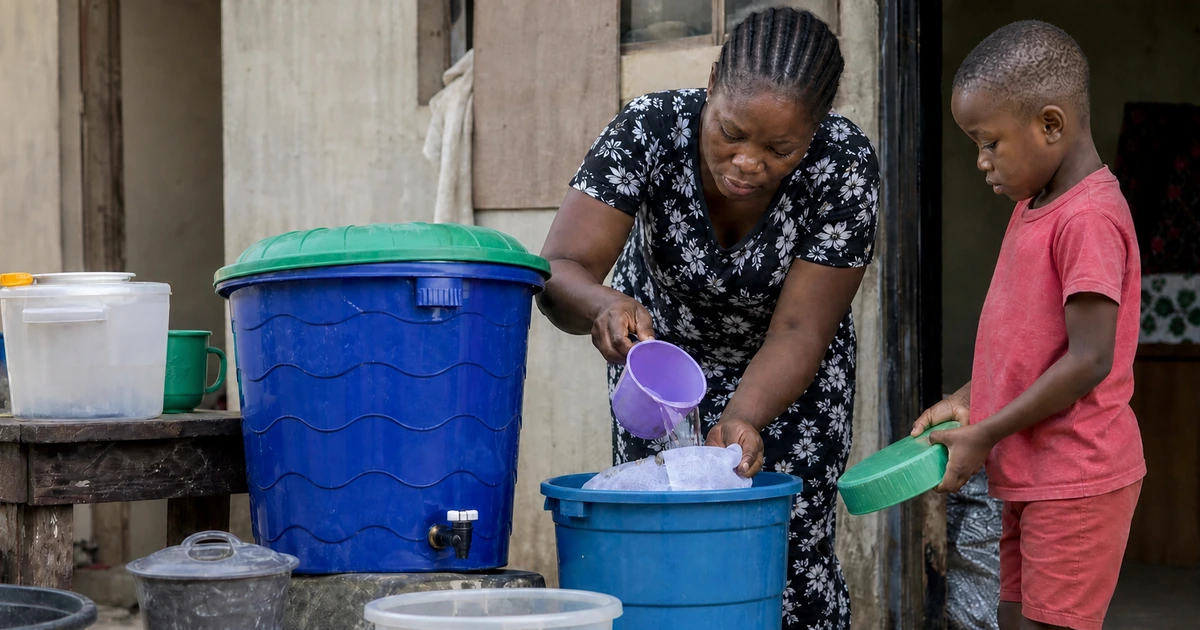
If school mornings are rushed and everyone is fetching water in a hurry, make the setup easier. Use a container with a tap if you can. If not, keep the scoop clean, dry, and used only for that job. A good routine should still work on a busy morning, not only when the house is calm.
The small mistakes that cause big trouble
Most water problems at home do not begin with one dramatic mistake. They build up from small shortcuts.
One common one is assuming clear water must be clean water. It may look fine and still contain germs.
Another is treating the lid like decoration. Once the container stays half-open, dust, fingers, cups, and insects enter the picture.
Another problem is mixing clean water with dirty serving habits. People may boil water well, then dip an unwashed cup into it ten times before dinner. That can undo the effort very quickly.
We also see issues when households reuse containers without checking what was inside them before. A bucket that held laundry water or cleaning solution last week should not quietly become the drinking-water bucket this week.
Then there is the habit of topping up old water with fresh water. It may feel economical, but it is not wise. Old water and residue at the bottom can spoil the new refill.
If someone at home starts having diarrhoea or vomiting
First, do not panic. Next, do not jump straight to leftover antibiotics because somebody in the house says they helped once before. Many cases of diarrhoea get better with careful fluids, rest, and time. The wrong medicine can add another problem on top.
The main priority is to prevent dehydration.
Give small, frequent sips of clean water or oral rehydration solution.
Continue breastfeeding for babies.
If the person can eat, offer light foods instead of forcing a long fast.
Watch how often the person passes urine. Very little urine is an early warning sign that should not be ignored.
Be careful with anti-diarrhoea medicines, painkillers, and strong mixtures, especially in children, older adults, pregnant women, and people living with conditions such as diabetes or kidney disease.
If more than one person in the house is getting sick, review the water routine for everybody immediately.
This is often the point where somebody remembers the dispenser in the corner that has not been washed properly since before the last fuel queue. Better late than never, but earlier is better.
What not to do
Some habits sound helpful but can make things worse.
Do not start antibiotics on your own for every episode of diarrhoea.
Do not assume soft drinks, energy drinks, or very sugary juices can replace oral rehydration solution properly.
Do not wait until someone is weak and dizzy before taking fluids seriously.
Do not give adult medicines to a child because the child is using the toilet often.
Do not ignore repeated stomach upset in the same household. A pattern like that matters.
Do not keep using a water source you no longer trust while hoping medicine will handle the rest.
Medicines can support recovery, but they will not fix a contaminated water routine.
When to seek urgent help
Please get urgent medical help if any of these happen:
Blood appears in the stool.
Vomiting will not stop or the person cannot keep fluids down.
There are signs of dehydration such as very dry mouth, dizziness, extreme weakness, sunken eyes, unusual sleepiness, confusion, or little to no urine.
A baby, young child, older adult, or pregnant woman is getting worse.
There is high fever, severe stomach pain, fainting, or confusion.
Diarrhoea lasts more than a couple of days without improvement.
The person has a medical condition that makes dehydration more dangerous.
Children can go downhill faster than adults. Older adults can too. If someone looks clearly different from their usual self, do not wait for a perfect textbook pattern before you act.
A rainy-season routine worth keeping
The goal is not perfection. It is consistency.
Once the rains settle in, choose one system the household can truly maintain: a safe source, proper treatment when needed, a clean container, a tight cover, a clean serving method, handwashing, and quick action if stomach symptoms start. That steady chain matters more than fancy equipment and more than guesswork.
Most families hardly notice good water habits when everything is fine.
They notice the confusion when those habits disappear.
Disclaimer
This article is for general health education and is not a substitute for personal medical care. If you are not sure what is causing vomiting, diarrhoea, or dehydration, speak to a pharmacist or doctor and seek urgent care when symptoms are severe.
Sources & further reading
Small changes here can save plenty trouble later.

No comments yet. Login to start a new discussion Start a new discussion