Children's Health
How to Tell When a Child Is Getting Too Hot
A clingy, quiet child after a hot outing may need cooling before anything else. Here is how to spot overheating early and know when it is urgent.
Reviewed by: Amela Pharmacy team, Uyo Last updated: 20 Mar 2026
By mid-afternoon, a child who was full of noise in the morning can suddenly go quiet. That is often the first sign parents miss.
We see it after school pickup, a market run, or football that went on too long. A child comes in with flushed cheeks, a dry mouth, and that tired look that tells you something is wrong before they even say a word. In hot weather, children can move from uncomfortable to properly unwell much faster than adults.
Why this happens faster in children
Children lose fluid quickly, heat up faster, and do not always notice thirst early. Some are too busy playing to stop. Some just become clingy, irritable, or sleepy instead of saying they feel dizzy. Babies are harder still because they cannot tell you what is wrong.
They also do not know when to slow down. A child can keep playing long after an adult would have sat down to complain. Add school uniform, socks, or a packed ride home, and the body has even more work to do.
And honestly, our daily routine is not exactly heat-friendly. A crowded keke ride, waiting outside school with no shade, an afternoon errand when the sun is biting, or a stuffy room when NEPA has taken the light can all push a child too far.
Not every hot child has malaria or a fever. Sometimes the main issue is simple overheating or the early stage of heat exhaustion.
The early signs are usually small
Before a child looks seriously ill, you may notice a few quiet changes.
- They become unusually tired, clingy, whiny, or less playful.
- They complain of headache, dizziness, tummy discomfort, or nausea.
- They are sweating heavily, or their clothes feel damp and sticky.
- Their mouth looks dry, and they keep asking for water.
- Their face is flushed, and their skin feels very warm.
- They are breathing faster than usual after only light activity.
- They have muscle cramps or say their legs feel weak.
- They pee less, or the urine is darker than usual.
In babies and toddlers, the signs can be easier to miss: fewer wet nappies, fewer tears when crying, dry lips, unusual sleepiness, or a child who feels hot and unsettled but does not settle well.
Children rarely explain this neatly. Most times, their body language tells you first.
Heat or fever? Start with the story
If the child was fine indoors, then became miserable after a long wait in the sun, active play, a hot room, or a crowded trip, overheating should be high on your mind. A fever from infection can start even in a cool room and may come with cough, sore throat, diarrhoea, body pain, or a child who still looks unwell after cooling down.
Sometimes the picture overlaps, and you do not need to solve the whole diagnosis in five minutes. First make the child safe: cool them, offer fluids, and watch whether they improve. If the child is very young, has a chronic illness, or the symptoms are not making sense, get professional help.
What to do in the first 20 minutes
If you think a child is overheating, treat it as a right-now problem, not something to leave till evening.
- Move the child out of the sun straight away. Shade is good. A cooler room is better.
- Loosen or remove extra clothing. Thick layers are not helping.
- Offer small, frequent sips of cool water. Do not force large gulps all at once.
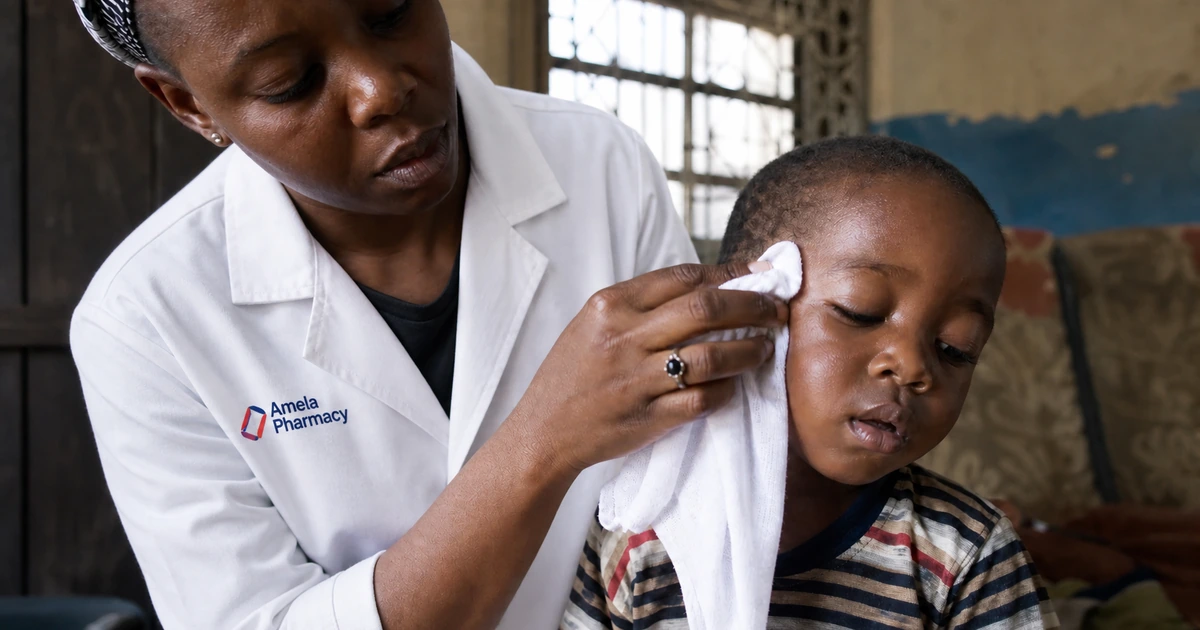
- Use a cool wet cloth on the neck, armpits, forehead, and groin. A cool bath or shower can help too.
- Stop the running around, football, rough play, or walking in the sun. Rest matters.
- Watch the child closely for the next 15 to 30 minutes.
Do not rub ice directly on the skin or force a child to gulp a whole bottle at once. Slow, steady cooling works better. If the child is too drowsy to drink safely, that has moved beyond home care.
If the child is older and alert, water is usually a good first step. If vomiting or diarrhoea is part of the picture too, ask a pharmacist about oral rehydration solution instead of guessing.
One mum came in after a long market morning with her six-year-old, convinced malaria had appeared out of nowhere. He had been in a crowded keke, barely drank from his bottle, and had not passed urine since breakfast. After shade, water in slow sips, and a cool cloth, he perked up and started asking for biscuits again. When children improve with cooling and fluids, that tells you something important.
A simple hot-day checklist before you leave home
On very hot days, a little planning can save you plenty of stress later.
- Pack water for the child, not only for the adults.
- Dress them in light, loose clothing that breathes.
- Use a hat or shade if you know the outing will be long.
- Plan errands earlier in the morning or later in the day when you can.
- Build in cooling breaks if the child will be outdoors for more than a short stretch.
- Do not leave children in parked cars or sealed rooms, even briefly.
- If the child is old enough to play hard, remind them to pause for water before they feel thirsty.
- Keep an eye on how often they are urinating; it is a simple hydration check many parents miss.
If school pickup means standing by the road in full sun, carry the water, not just good intentions. Once the bottle in the bag feels warm like tea, the weather has already made its point.
Who needs quicker attention
Some children can run into trouble faster and need closer watching.
- Babies and very young children
- Children with diarrhoea or vomiting
- Children with asthma, heart disease, kidney problems, or other chronic illness
- Children who have already been sick and are not drinking well
- Children doing sports or outdoor play in the afternoon heat
- Children who are unusually sleepy or clearly out of character
Babies under 6 months generally need more frequent breastfeeding rather than plain water unless a clinician has advised otherwise. For older babies and children, regular fluids matter a lot. If you use a stroller or pram, avoid trapping heat around the child. A dry cover over the front can make it hotter inside, not cooler.
When it stops being a home-care problem
Heat exhaustion can often improve when you cool the child early and replace fluids. Heatstroke is different. Heatstroke is an emergency.
Do not wait for the thermometer reading to look perfect before you act. If a child is confused, collapsing, difficult to wake, or getting worse instead of better, the weather is no longer just background. It is the problem.
Seek urgent help now if you notice any of these
- The child is confused, unusually drowsy, fainting, or hard to wake.
- They are having trouble breathing or breathing very fast.
- They stop sweating and the skin feels very hot and dry, or they look dangerously unwell even if still sweating.
- They cannot keep fluids down because of repeated vomiting.
- They have a seizure.
- They develop severe weakness, a bad headache, or cannot stand properly.
- A baby has very few wet nappies, a sunken soft spot, or no tears when crying.
- Symptoms are not improving after 20 to 30 minutes of cooling and fluids.
- You are simply not sure what you are looking at, but the child looks seriously unwell.
That last point matters. Parents often sense when something is wrong before they can explain it neatly.
Common mistakes that make hot days worse
The first is assuming every hot, limp child needs medicine before cooling. If the problem started after sun, play, a long trip, or a hot room, cool the child first and assess properly. Medicines have their place, but they do not replace shade, fluids, and close observation.
The second is waiting for thirst. By the time some children ask for water, they are already behind.
The third is over-wrapping. A child with hot skin is not always a child who needs another layer or blanket. Sometimes they need the exact opposite.
The fourth is offering only fizzy drinks or very sweet juice because it feels easier. Water is usually the better place to start. If the child has also lost fluid through vomiting or diarrhoea, use proper rehydration advice.
The fifth is sending the child back outside too quickly because they seem better. Give them time. A child who has just cooled down still needs rest.
A few sensible ways to prevent the whole drama
You do not need a military operation. Just a routine that works.
- Encourage drinks through the day, especially before outdoor play.
- Use lighter clothing and breathable fabrics.
- Keep the hottest part of the afternoon for quieter indoor activities when possible.
- Let children rest in shade during football, PE, or active play.
- Make sure caregivers, school staff, grandparents, and older siblings all know the early signs.
- Keep a small home setup ready: water, a thermometer, a clean cloth for cooling, and oral rehydration solution if your child is also prone to vomiting or diarrhoea.
On especially hot weeks, teach older children that pale urine is a better sign than waiting for a headache.
This helps most on those hot, sticky days when the house feels warmer after the generator has been running and everybody is a bit less patient than usual.
A quick note before you panic
Most children who are getting too hot will improve quickly when adults notice early, act fast, and keep things simple. The real danger comes from missing the signs, assuming it will pass on its own, or trying to manage a very sick child at home for too long.
Disclaimer
This article is for general education only and does not replace medical advice. If your child looks seriously unwell, has red-flag symptoms, or you are unsure whether this is overheating, infection, or something else, seek professional care promptly.
Sources & further reading
- WHO: Heat and health
- CDC: Heat-related illnesses
- UNICEF Parenting: Heat wave safety tips
- NHS: Dehydration
On hot days, the small signs matter.

No comments yet. Login to start a new discussion Start a new discussion