Children's Health
Childhood Fever in Nigeria: What to Do First and When to Worry
Fever in children is common and scary. Here’s a calm, Nigeria‑friendly guide to checking temperature, home care, and when to seek urgent help.
Reviewed by: Amela Pharmacy team, Uyo Last updated: 13 February 2026
Fever can make any parent panic. One minute your child is playing, next minute they are hot, weak, and refusing food. I always tell parents: stay calm first, then observe well. Fever is a symptom, not the full diagnosis.
What fever means (and what it does not)
A temperature of 38°C or higher is a fever. In many children, fever is the body's way of fighting infection. It can happen with cough, cold, tummy infections, teething discomfort, or after some vaccinations.
Try not to focus only on the number. A child who is drinking, alert, and making eye contact may still be stable even with a higher reading. A child who is very sleepy, not feeding, or breathing fast needs attention even with a lower reading.
First steps at home
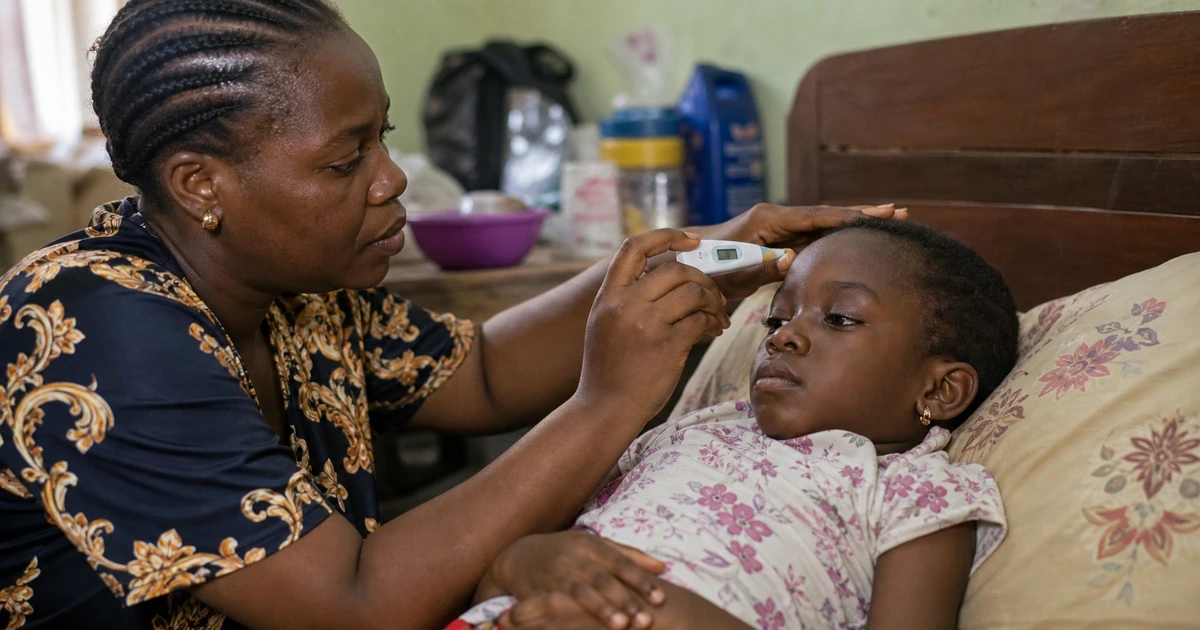
- Check temperature with a digital thermometer (under the armpit is practical for young children).
- Offer fluids often: water, breast milk, or oral rehydration solution in small sips.
- Dress your child in light, breathable clothing.
- Let them rest in a cool, airy room.
- Watch urine output or wet nappies to monitor hydration.
- If your child is uncomfortable, use child-safe paracetamol or ibuprofen only when appropriate for age and weight, and only as directed on the label.
- If you are unsure about dose or product choice, ask a pharmacist before giving any medicine.
A quick real-life reminder from our Uyo pharmacy: a mum was waking her toddler every hour to recheck temperature. Everyone was exhausted, and anxiety was rising. We agreed on sensible check intervals, more fluids, and red-flag monitoring. By morning, the child was better and the mum was calmer too.
Common mistakes to avoid
- Over-wrapping children in thick clothes or blankets.
- Using very cold baths or icy sponging.
- Starting antibiotics without proper assessment.
- Giving two or more cold/flu products with overlapping ingredients.
- Using adult medicines or unclear herbal mixtures for children.
- Alternating paracetamol and ibuprofen without professional guidance.
When to Seek Help
Seek care soon
- Fever lasting more than 2 to 3 days, or fever that keeps returning.
- Poor drinking or fewer wet nappies than usual.
- Ongoing vomiting or diarrhoea.
- Child is unusually irritable, weak, or not acting like themselves.
- You feel something is not right, even if signs seem mild.
Get urgent help now
- Baby under 3 months with fever (38°C or higher).
- Fast, difficult, or noisy breathing, or chest pulling in while breathing.
- Rash that does not fade when pressed with a clear glass.
- Seizure, persistent shaking, or loss of responsiveness.
- Stiff neck, severe headache, or unusual sensitivity to light.
- Blue, grey, or very pale lips or skin.
- Severe dehydration signs: dry mouth, no tears, very few wet nappies, or hard to wake.
If malaria could be involved
In Nigeria, malaria is common, but not every fever is malaria. Testing helps you treat correctly. Avoid repeating antimalarial medicines without testing. If treatment was started and fever does not settle, or returns quickly, your child needs reassessment.
Fever care checklist (first 12-24 hours)
- [ ] Take and record temperature with a digital thermometer.
- [ ] Offer fluids every 15 to 30 minutes in small amounts.
- [ ] Keep clothing light and room well ventilated.
- [ ] Monitor urine output or wet nappies.
- [ ] Note other symptoms like cough, rash, vomiting, diarrhoea, or pain.
- [ ] Use only one child-appropriate fever medicine when needed, following label directions.
- [ ] Recheck after rest, not immediately after bathing.
- [ ] Write down time, temperature, and any medicine given.
Medicine safety notes for parents
Fever medicine helps comfort; it does not cure the underlying cause. Use one medicine at a time unless a clinician advises otherwise. Never give aspirin to a child. If your child has asthma, kidney problems, stomach ulcers, or dehydration, speak with a pharmacist or clinician before using ibuprofen.
Short disclaimer
This article is for general health education and does not replace diagnosis or treatment from a qualified medical professional. If you are worried about your child, seek medical care promptly.
Need help? Chat with us on WhatsApp or contact us.

No comments yet. Login to start a new discussion Start a new discussion